Friday, 22 July 2011

The leaning tower of PISA...

Florence, the capital city of the Italian region of Tuscany, lies on the river Arno and is known for its art, architecture and cultural heritage.


We reached Florence in the morning and immediately left for our tour to Pisa.


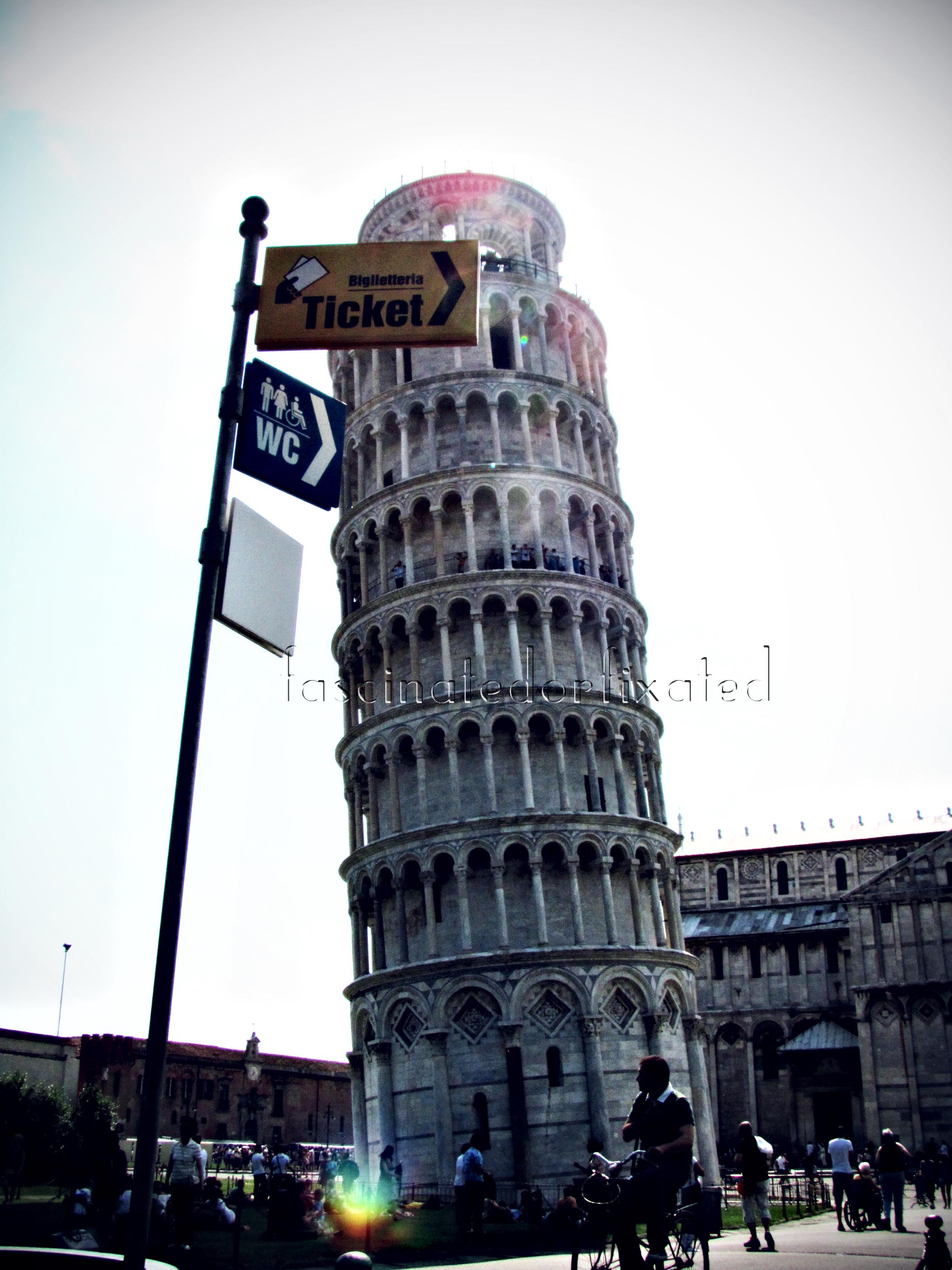
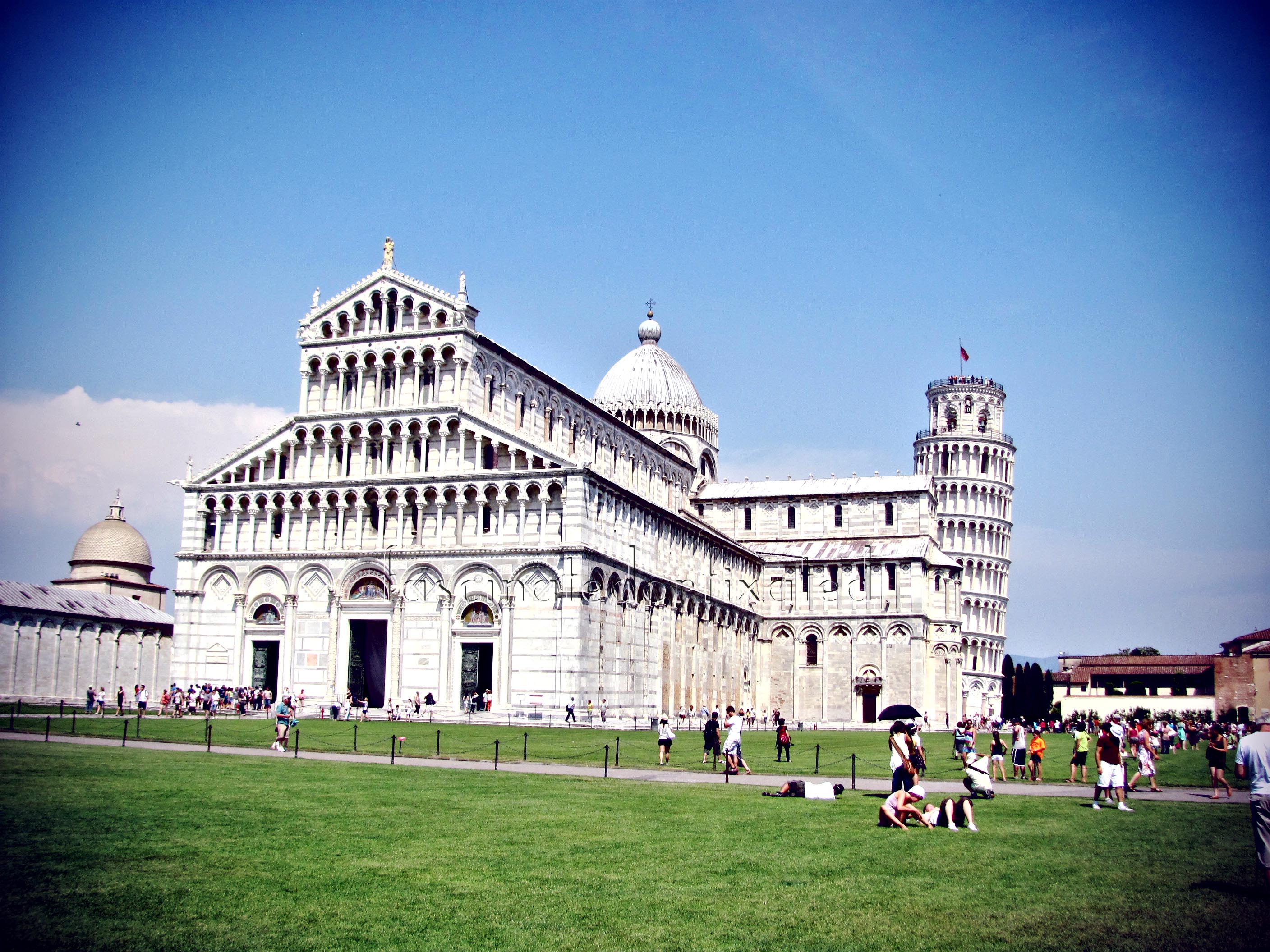
The leaning tower of Pisa is one of the four buildings that make up the cathedral complex in Pisa, known as Campo dei Miracoli or the Field of Miracles.


The tower is built completely out of white marble.


The Duomo di Pisa is probably one of the most beautiful churches of the world. Built in true Pisan-Romanesque style of architecture, the cathedral is covered in white marble and stone.


The four rows of arches seen above were inspired by Moorish architecture.


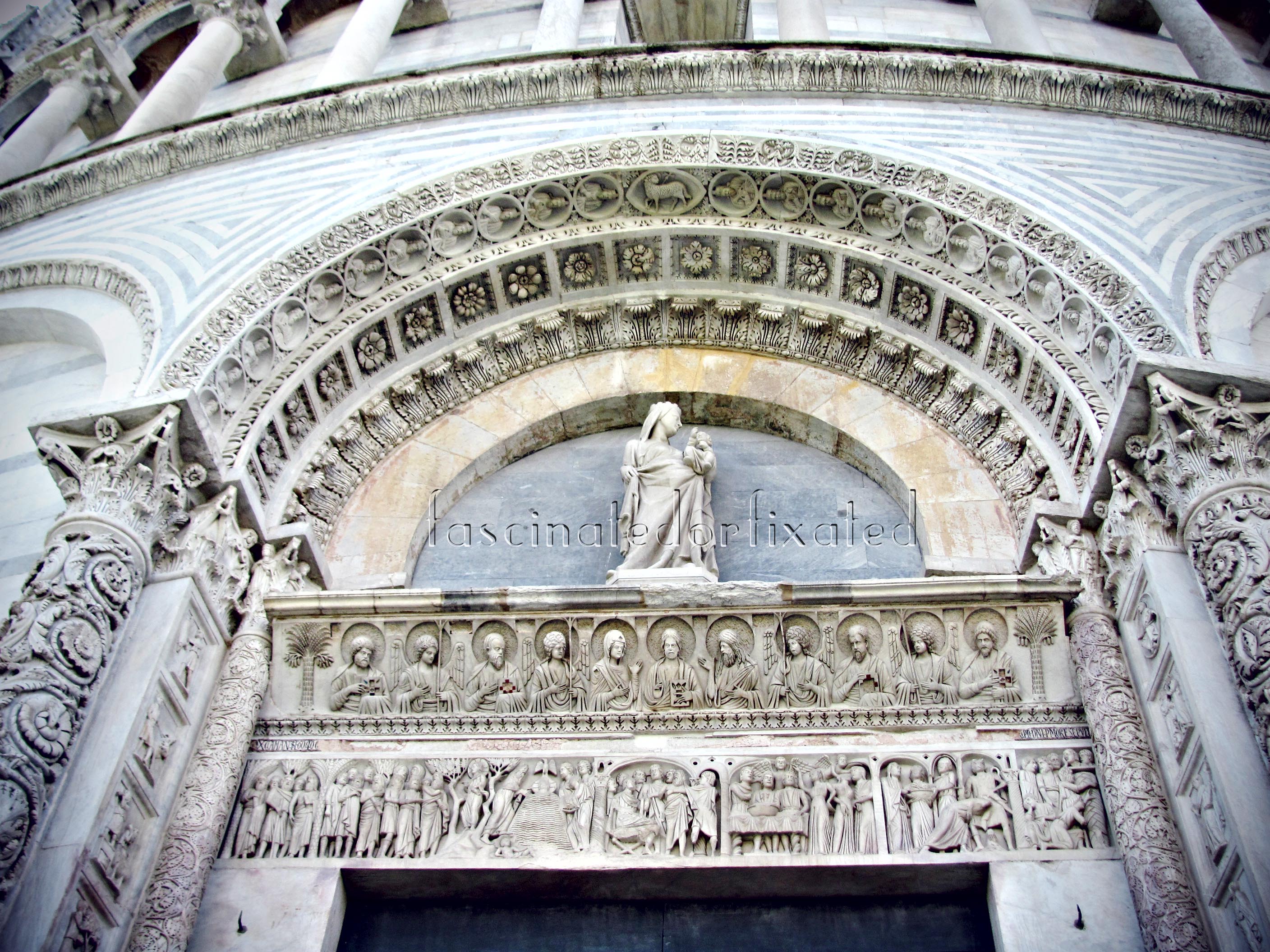
One out of the three entrance doors to the cathedral, made completely in bronze and covered in beautiful relief depicting biblical stories.


The interiors of the cathedral, mostly decorated in Renaissance art.


The Duomo di Pisa is definitely a beautiful site, the most striking feature being its massive exteriors.


The next morning we were on the train to Milan.


Photographs by : Urmita Das

The city of canals....

 We reached Venice, the city of canals, as we know it; around noon.


After a little rest in our hotel and some information from our receptionist, we again had the opportunity to indulge ourselves with some Italian delicacies like pizza con verdure (pizza with vegetables), pizza con patate fritte (with French fries), salmon al forno (baked salmon), verdure miste e cotte (mixed vegetables) accompanied with red wine and peach juice, followed by cappuccino.


We had the day at our leisure so we decided to start off with the ever popular ride on the Gondola.


The gondola takes you around the city through its narrow canals all the way till the Grand Canal, crossing beautiful houses with bouquets of flowers on the windows, and the colors of the houses just seem entrancing.


The gondolier will make sure that you have a great time on the gondola, giving you all the necessary information about the city.


Well, after the gondola, we decided to walk around the streets and see if we could get some souvenirs.


All around Venice, you will find shops selling Venetian masks, theatre costumes and props. My sister and I tried a few but ended up buying only a mask magnet to be rightfully placed on our refrigerator back home.


Shortly after, we came upon a store selling leather bags.


And I ended up buying this cute sling bag for my friend.


Venice also has an array of old buildings and churches. We walked around the Maddona Dell’Orto.


The red brick structure is known to be the parish church of the famous artist Tintoretto and contains many of his notable works of art. Also, the structure was built in a Gothic style of architecture.


The next day we had a tour of the three islands around Venice; Murano, Burano and Torcello.


The boat ride was from St. Mark’s Square.


The Basilica di San Marco is by far the finest example of Byzantine architecture in the world and is one of the most famous churches in Venice.


The Piazza San Marco also has an open market where you can buy any amount of things ranging from inexpensive souvenirs to high end designer stuff.


My sister could not help buy an absolutely fabulous leather belt from Guess to be worn with her ‘dress’ in Milan.


My apologies for not mentioning earlier. Throughout Italy, you cannot walk around the streets and not indulge in Gelato. There are gelato shops everywhere and the flavors vary from shop to shop. My favorites French Vanilla, Chocolate, Stracciatella, Tiramisu, and Caramel.


We left for our Murano, Burano and Torcello tour at around 2:30 PM and our first stop was Murano, an island famous for its glass blowing factories. We were taken to one such factory where we got a demonstration of manual glass blowing.


Our next stop was Burano, another island off the coast of Venice, which is famous for its handmade lace. All around you can see shops selling exquisite lace products and if you go inside one of these shops, you can meet the woman making the lace. The houses in Burano are even more colorful than in Venice.


After the fascinating lace experience, we take off for the third island, Torcello.


The Basilica di Santa Maria Assunta is the oldest on the Venetian lagoon and the interiors is decorated with mosaic of Ventian-Byzantine style.


Having seen the three islands, we then returned to Piazza San Marco, to take a closer look at the Basilica.


You can see the interior has been completely done in mosaic in a Byzantine-Gothic inspired style. Gold, Bronze and a lot of other stones can be seen in the ornamentation of this basilica.


After the endless photographic session, we finally sat at a nearby bistro and ordered food; pizza calzone, a huge version of the normal calzone, spaghetti pomodoro (with tomato salsa), pizza with four different types of meat, fried chicken followed by cappuccino. And we were greeted by an orchestra of musicians who played among other songs a Hindi song!


Next morning, we took a train to Florence.


Photographs by : Urmita Das

Thursday, 21 July 2011

Con l'amore, l'Italia!

Recently, I went on a vacation to Italy, Switzerland and Paris, with my family.


We started off in Palermo, Italy!


Palermo lies on the northwestern coast of the island of Sicily.


A reasonable mix of Byzantine, Arab, Norman, Renaissance and Baroque architecture, including palaces, castles, and churches, the city has a lot to offer.


But we were on a slightly tight schedule. After reaching the hotel at around 9 PM, we went out for dinner at a nearby restaurant, and we had a sumptuous Italian dinner of fettuccine pasta, shrimp risotto and red wine.


The next day we took a hop on hop off tour of the city. Our hotel was close to the Teatro Politeama, which is located on Piazza Ruggero Settimo, in the center of Palermo.


We passed by the Teatro Massimo, Quatro Canti, Orto Botanica, finally stopping at Palazzo Realo di Palermo.


The royal palace of Palermo contains the Capella Palatina. The Chapel is an excellent example of the Arab-Norman-Byzantine style. The interior of the Chapel is enclosed by a mosaic of millions of gold tiles representing many stories.


After our short and exciting experience of 12th century Byzantine art, we stopped for lunch at a nearby bistro where we had baked chicken, Fried squids, and Grilled Swordfish followed by cappuccino.


After the hearty meal, we went for our next adventure at the death museum in Palermo, The Catacombe dei Cappucini.


The museum holds thousands of mummies of Sicilians, buried in the Cappucin catacombs which contained a preservative that helped mummify the dead bodies.


The mummies remain unharmed. You can still see bits of hair, their clothes give a clear indication of their professions.


Our next stop was the Duomo di Palermo.


Like many other Sicilian monuments, the cathedral displays a wide variety of architectural styles.


 From Gothic to Catalan to Islamic inspired, this stands as the most distinguishing feature of the cathedral.


Inside the cathedral lie the tombs of many of the Sicilian kings.


Me outside the cathedral.


Our short while in Palermo ended with an authentic Chinese dinner of prawn chips, chicken and corn soup, Chinese noodles, fried rice, prawns in Chinese sauce and fish in Chinese sauce.


The next morning, we took a flight to Rome and continued to Venice.


Sunday, 17 July 2011

This is what I graduate with.....

I recently graduated as a fashion designer. As our final project, we had to develop a collection from scratch.


Its been a while since the collection was showcased in the graduation show held in my college, and although its been 6 months working on this project, I'm still a little obsessed with it!


Swadeshi – meaning of one’s own country


Swadeshi was a movement introduced by Mahatma Gandhi which started in 1905 and continued till 1908. It was a part of our freedom struggle and encouraged the masses to use homemade produce rather than British goods.


This also included the use of homemade cloth which gave rise to ‘Khadi’.


'Khadi' is a fabric that is hand spun and hand woven.


Now, without further ado, let me walk you through the working of the project and the final collection.


The main idea was to promote the use of ‘Khadi’ as a part of the corporate wear for Indian women.


As the fabric is expensive due to its handmade attributes, the collection was aimed at a higher level of corporate professionals who need to ‘dress to impress’.


[youtube http://www.youtube.com/watch?v=IhbZUrIZwFs&w=425&h=349]


A short video about the whole concept


As fashion students, we generally sketch a version of the collection as we see it in our head before we start off with actually constructing it.


This however was done after the completion of the collection.


Now, let’s move on to the final outfits.


The first outfit – Silk khadi Nehru jacket with a lining of pure khadi and hand embroidery on the cuffs and the lapel, worn with hand printed khadi churidar.


Khadi kurta with embroidery between tucks and gathered sleeves; with Khadi silk cropped jacket with Nehru collar; worn with straight fit Khadi pants


Khadi silk shirt kurta with Nehru collar and hand embroidery around the neckline, worn with straight fit, hand printed Khadi pants.


Khadi silk jacket with Nehru collar, lined with hand printed khadi, worn with khadi wool draped skirt.


Khadi shirt with Nehru collar and bishop sleeves with hand embroidery on the cuffs, khadi silk vest lined with hand printed khadi worn with khadi wool Jodhpuri inspired pleated trouser.


Khadi flared kurta with Nehru collar and hand embroidery on empire line, worn with a khadi churidar and khadi muslin jacket hand embroidered on the sleeves.


Each look has been created by teaming up 2 or more pieces to create a corporate look, however, these can alternatively be worn with basic wardrobe pieces to create different looks.


[gigya src="http://static.issuu.com/webembed/viewers/style1/v1/IssuuViewer.swf" type="application/x-shockwave-flash" allowfullscreen="true" menu="false" style="width:420px;height:297px" flashvars="mode=embed&layout=http%3A%2F%2Fskin.issuu.com%2Fv%2Flight%2Flayout.xml&showFlipBtn=true&documentId=110717102808-56fc162442a64d17a2c8dbd57d333508&docName=swadeshi_lookbook&username=uparnadas89&loadingInfoText=Swadeshi%20Look%20Book&et=1310909781455&er=85"]


This look book gives an idea of how the separates can be worn differently.


Hope everyone likes it!


EDIT : Credit for images :

www.indiangreattradition.blogspot.com

www.papatoto.com

www.gandhiserve.org

Credit for movie sources:

www.gandhiserve.org

Clip from Ben Kingsley's Gandhi(1982)

Music : Yeh Jo Des Hai Tera(Instrumental) from the movie Swades(2004)

Fashion Illustration template by : www.designersnexus.com